Burner Bites: Kitchen Ops for Novices
Hey there, Fremen
Post written during kitchen planning. If you have experience organising Burn camps - or any other feedback - I'd love your advice in the comments.
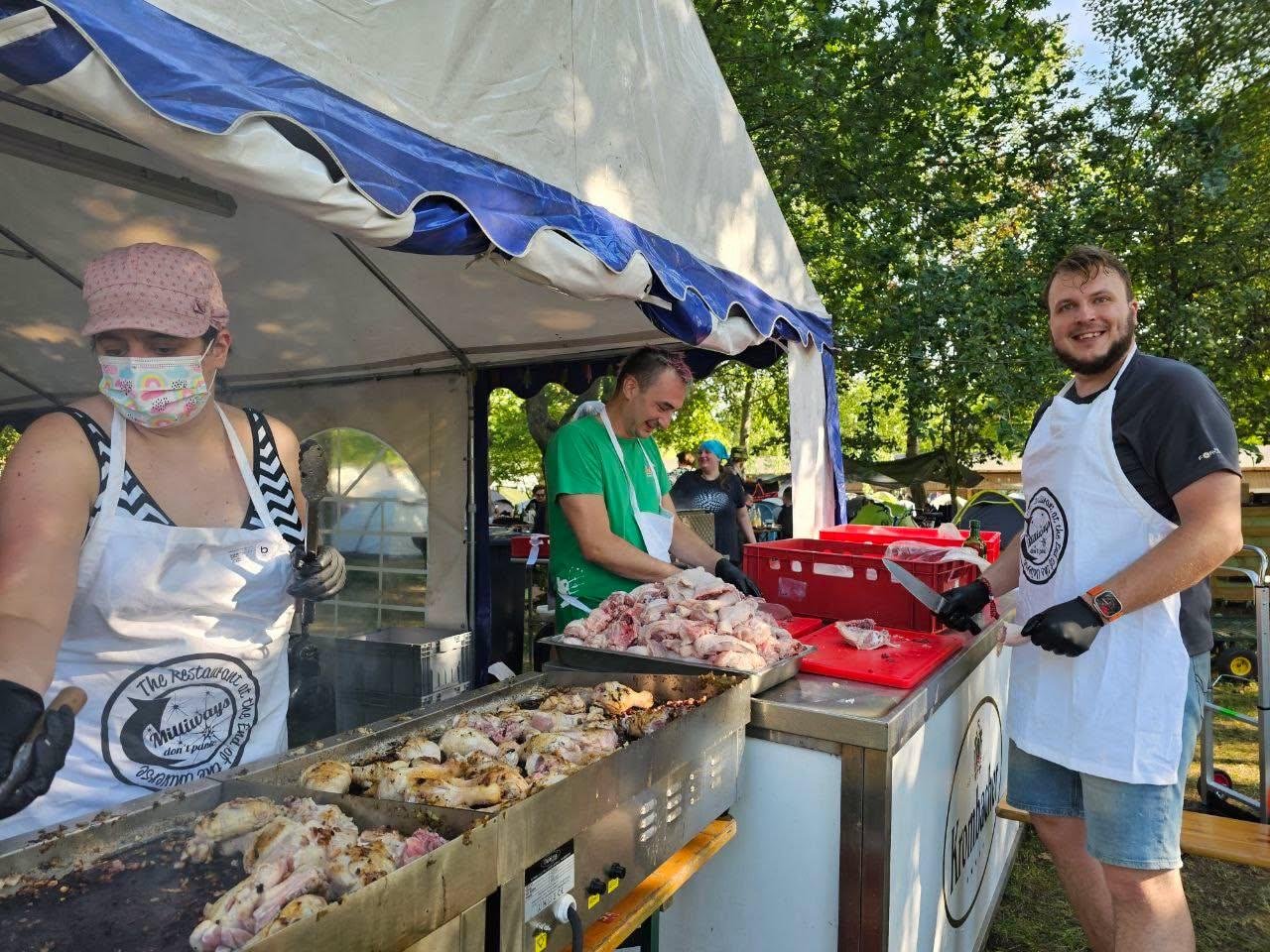
TL;DR: Off to AfrikaBurn 2026 with our spanking new 50-person camp. Most are Burning Man novices - should be... educational. I've got field kitchen experience from European geek festivals like CCC Camp, always with beloved Milliways: under the firm guidance of @zornem - @vas3k and I once butchered 400 chicks in one evening. I'm going to lead Kitchen, and for our first time my strategy is "Reliability over Ambition" - no grouse on the grill, only proven recipes and best practices: pre-cooked and frozen in advance. In this post: how to organise a kitchen, how much food to bring, how not to poison people or burn down the desert, and what the hell is an EVAPOTRON.
 vas3k
vas3k
Prelude: Pre-cooking Party as Team Building
A new camp means nobody really knows each other. All I know about 45/50 of my future village is that they share common vibes from a (good one but still) blogging community. It needs culture and cohesion around core values. Someone's got to forge those bonds! Simple: make 15 souls weep in a Cape Town kitchen, hacking 20 kg of onions for potjiekos - that glorious South African stew bubbling for 6 hours like grandma's cauldron of mildly eldritch soup.
Why?
- Food as cold packs. mmm-hmm. We cook everything 2-3 days before departure, freeze it, and these containers work as ice packs during the 5-hour drive to Tankwa Town. And we need to keep a lot of things cold.
- Distributed responsibility. Simple fare, all hands stir. Once you've manned the pot, no griping about tough meat — water under the bridge, and all that.
- Compatibility check. If people can't cook together for 4 hours without fighting, maybe we shouldn't take them into the desert for a week?

Philosophy for the first Burn : Reliability over Ambition
Yes, I'm a DevOps. The mindset sticks: first you plan stuff with sketches and checklists, often you just test it by asking "what else can go wrong?", then you materialise it. Don't know something? - DYOR.
I adore whipping up fancy nosh and strutting in the kitchen. But in the desert, faffing about could leave the horde famished or heaving like the bloke who swallowed a fish. Nix the spam, innit? So here's the deal:
This is our virgin Burn, chaps.
No experience slinging grub to hordes in such infernal climes; no battle-hardened sous-chefs. Nearest hospital: three hours' drive - four if your driver panics. Food poisoning out there? Jolly inconvenient, really - might even prove terminal. All pieced from FAQs and hearsay, naturally. And dash it all, we fancy a bit of festival, not chained to the stove like galley slaves.
Therefore Minimum complexity, maximum reliability - that's my choice.
What this means in practice:
| Ambitious Approach 🔥 | My Approach 🧊 |
|---|---|
| Fresh steaks every day | Pre-cooked stew - reheat and serve |
| Chef commands | Team rotation - each cooks one dinner |
| Complex multi-component dishes | One-pot meals |
| "We'll improvise as we go" | Clear plan with schedule for each day |
First Year Success Criteria
- Nobody got food poisoning
- Kitchen didn't fall apart
- People are happy and want to come to next Burn
Everything else is optional.
What is AfrikaBurn and Why It's Not a Music Festival
South Africa's Burning Man offshoot - second largest, rather splendid. Plonked in the Tankwa Karoo desert, 300 km from Cape Town, down Africa's longest road sans settlements. It's not a stroll in the park; it's a quest for the Holy Grail in yerself.
Key Burn Principles Affecting Kitchen Operations
- Radical Self-Reliance - nobody's going to feed you. Almost nobody. Nothing is sold on site (except ice, but more on that later).
- Leave No Trace - everything you brought, you take back. Including slop, peelings, ash, dirt, and your sad not materialised dirty fantasies.
- Gifting Economy - the food you cook for the camp is your gift to the community.
2026 Dates: April 27 - May 3. Plus 2 setup days (April 25-26). Then teardown, have early breakfast, and leave on May the 4.
Kitchen Placement
AfrikaBurn isn't "pitch your tent wherever it's convenient." There's no cleaning service (or any other service for that matter) - Leave No Trace. There are official safety requirements, and the Safety Officer will come inspect. I recommend reading them - there are non-obvious things like the glass prohibition.
There's something called MOOP (Matter Out Of Place).
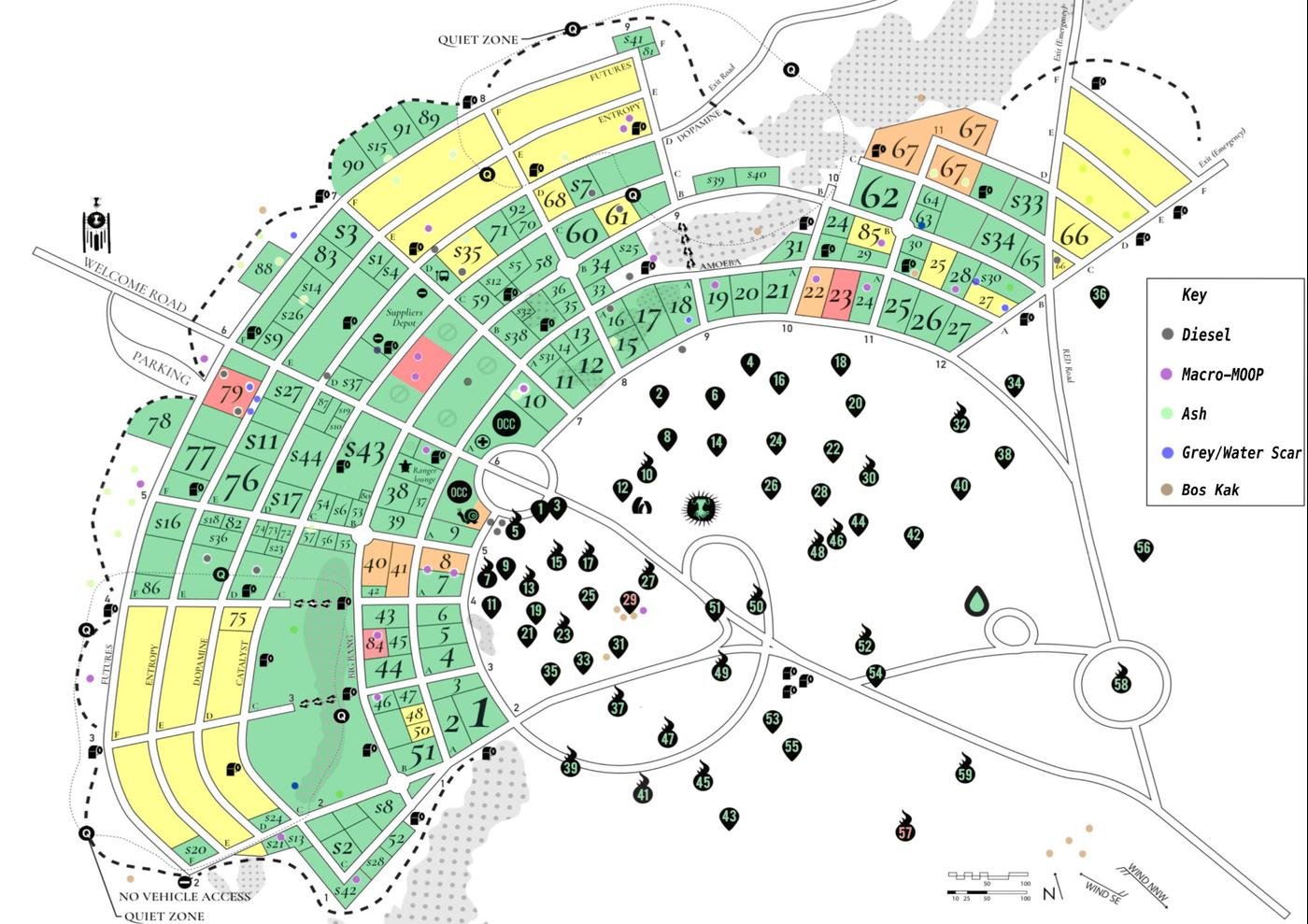
This is AfrikaBurn 2024 MOOP map. Pretty decent. The American burn is way, way dirtier. I couldn't find how they punish you for being messy, except for delays in village handover and departure accordingly, but we're nice people and don't want to be embarrassed on that map, innit?
Let's Build a Triangle
- 5 meters between tent and fuel
- 5 meters between tent and fire (braai/grill)
- 10 meters between fuel and fire
- 6 meters wide - fire lane that can't be blocked
The kitchen should face the camp's common area (not isolated in a corner) and be near provisions / vehicles / refrigerators but away from the street with traffic, downwind from dust sources.
Grey water: for camps > 50 people you need a way to dispose of it, but more on that later.
Fire Safety: Fire Marshal? Mash me some potatoes
Mandatory Minimum per Camp / Every 100 m² of Tents
- 2x fire extinguishers 4.5 kg each (DCP, serviced in last 12 months - they'll check the certificate!)
- 2x buckets of sand
- 1x fire blanket next to the stove
They actually check this stuff. If you have a not certified or an unserviced extinguisher - you'll go driving to Ceres or Calvinia for a new one before passing the gate.
- No fire on the ground - only in raised braziers / braai / grills
- Can't leave fire unattended (rangers won't ask and will put it out)
- Gas storage - in the shade
90 kg of fuel must be stored at the common Fuel Dump
- else the Fire Marshals oughtta spank you: Nobody expects the Spanish Inquisition Fuel Police!
Source: Quaggapedia - Fire Safety
Equipment
Everyone brings and washes their own plates / cups / utensils. And do label them already, because everyone has the same Decathlon stuff! We'll buy some backup stock tho.
We're ordering delivery - they'll bring and pick up water, tents, and all this:
Kitchen Tent
- Tent minimum 6×4 meters
- Stakes - rebar only
- Guy ropes - because it can get very windy
- Walls - closable on all sides, because it'll be windy with sand
- 2x mallets for stakes
Cooking and Serving
- 2x powerful two-burner gas stoves
- 1x powerful four-burner stove
- 5x medium pots (20 L) - for rice / pasta / potatoes and tea
- 2x large pans - for sauces and frying
- 1x flat-top griddle / plancha - better than pans for 50 people, flat surface allows cooking a lot simultaneously
- 2x medium metal spatulas - for cleaning the cooking surface
- 1x large braai / grill / brazier
- 6x gas cylinders 9 kg each
- 2x spare regulators + 2x hoses, gaskets, insulation and wrenches
- 3x ~1.2m stainless steel tables
- 4x large cutting boards
- 4x chef's knives
- 4x ladles
- 4x tongs with long handles - for grilling
- 6x serving spoons
- 2x colanders
- 4x large mixing bowls
- 2x can openers
- 2x sets of measuring spoons
Coffee and Tea
- 2x large percolators for 40-60 cups
- 4x moka pots for 6 cups (alternative/backup)
- 3x thermoses 3-5 liters - for storing hot water
Dining Area (9 tables)
- 12x salt shakers
- 12x pepper mills
- 6x squeeze bottles for ketchup
- 6x squeeze bottles for mustard
- 9x condiment caddies (table organizers for condiments)
- 18x napkin holders (optional)
Storage
- 4x cooler boxes 50+ liters each
- 6x water canisters 25 liters with taps
- 20+ various sizes - airtight containers for dry goods
- Shelves for containers and dry goods
- Optional: temperature monitoring for coolers and refrigerators
Washing & Hygiene
- This kind of 3-basin washing system
- 3x large dish drying racks
- 4x silicone drying mats
- 24x dish towels
- 3 liters biodegradable dish soap
- 12x sponges
- 10x rolls of paper towels
- 6x large bottles of hand sanitizer
- 100 heavy-duty trash bags
I considered a portable dishwasher - but in the desert? It'd demand 1-1.5 kW (solar forests!), guzzle water, spew grey sludge for the Evapotron, and croak under dust. We wash dishes by hand in three basins.
How to Get Water from IBC Cubes
Water will be delivered in large plastic cubes (IBC, 1000 L). We need:
- 2-3x IBC adapter taps (better to upgrade to ball valves)
- 2x battery-powered 12V submersible pumps - for quick filling
- 1x manual pump - backup for when batteries die
- 10m food-grade hose - from cube to kitchen by gravity
- 6x 25L canisters with taps - fill from cube, distribute to stations
Best practice: Fill 25L canisters from the cube and place them at stations. Much more convenient than messing with the hose every time.
We have a bonus: 4+ vehicles with 90-liter refrigerators each. This is a pretty common for prepped rigs 90 liter switchable refrigerator / freezer. Ford Ranger / Toyota Hilux with 12V/150W solar panels and camping batteries. This is backup in case we won't find a refrigerator.
Refrigerators operations:
| Vehicle | Contents | Mode |
|---|---|---|
| Vehicle 1 | Frozen meals (days 1-3) | FREEZER until day 3, then fridge |
| Vehicle 2 | Frozen meals (days 4-7) + meat for braai | FREEZER entire event |
| Vehicle 3 | Fresh products: cheese, butter, eggs, milk | REFRIGERATOR entire event |
| Vehicle 4 | Backup + drinks + ice | REFRIGERATOR, can switch |
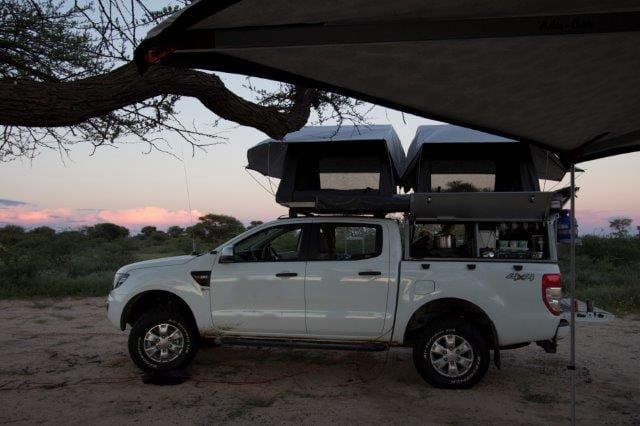
Critical:
- Park vehicles in the sun during the day so solar panels charge the batteries
- Nights in Tankwa are 0+9°C - easier for refrigerators, but freezers still need power
- Assign people responsible for refrigerators, minimise opening time
- If a refrigerator dies - redistribute to the others + coolers. We buy ice at Die Yskas.
The only thing sold at the Burn is ice. And we'll more than likely need someone on ice duty. And they'll need a bicycle.
Water: 5 Liters Per Day
Official recommendation - 5 liters of water per person per day. This is for drinking, cooking, and washing dishes.
9-Day Calculation
| Purpose | Per Day | Total |
|---|---|---|
| Drinking (50 people × 3L) | 150 L | 1,350 L |
| Cooking | 30 L | 270 L |
| Washing dishes | 50 L | 450 L |
| 15% buffer | - | 310 L |
| TOTAL | - | ~2,400 L |
This is kitchen only, personal hygiene separate.
Menu and Shopping
Disclaimer before everyone fills the food allergies table: Vegetarians: by far numbers are too few for custom reheat menus; meat isolation sours the pot for all. On pasta and rice days we can serve you portions without protein. If you want to cook for yourself, please coordinate kitchen use with me in the kitchen chat or DM and tell which proteins would you like. Next time we'll try to prepare better. Hope you understand.
Breakfast (daily, self-service 07:00-10:00)
| Item | Quantity | Comment |
|---|---|---|
| Muesli/granola | 8 kg | ~80g portion |
| Long-life milk (Tetra Pak) | 40 L | for muesli and coffee |
| Instant oatmeal | 200 pcs | |
| Hardy fruits (apples and oranges) | 80 pcs | store well for a week |
| Protein bars | 150 pcs | backup + snacks |
| Biltong | 3 kg | dried meat, doesn't need refrigeration |
| Droëwors | 2 kg | dried meat, doesn't need refrigeration |
| Rusks (local cookies for dunking in coffee) | 4 kg | |
| Peanut butter, jams, honey | 5 kg | for bread and cookies |
| Crackers / rice cakes | 20 packs | supplement to bread |
| Hard cheeses | 2 kg | store in refrigerator |
Coffee / Tea Station
| Item | Quantity | Comment |
|---|---|---|
| Ground coffee | 3 kg | percolator/moka pot |
| Instant coffee | 1 kg | backup |
| Black tea | 200 bags | |
| Various herbal teas | 200 bags | rooibos, chamomile, mint, ginger, etc. |
| Sugar | 3 kg | |
| Powdered creamer | 1 kg | backup milk |
Paradoxically, people note that appetites wilt in the heat. No lunch, but snacks persist until dinner - small mercies.
Dinner (18:00, team rotation)
| Date | Dish |
|---|---|
| 25.04 (setup) | No breakfast, setup crew drove 5h and just set up kitchen. Curry (reheat) + rice (cook) |
| 26.04 (setup) | Pasta (cook) + tuna sauce |
| 27.04 | Potjiekos (reheat) |
| 28.04 | Pasta (cook) + pesto + parmesan |
| 29.04 | Butter chicken (reheat) + rice (cook) |
| 30.04 | Beans + Boerewors + bread |
| 01.05 | Rice + canned goods + pickled vegetables |
| 02.05 | Beef stew + mashed potatoes |
| 03.05 | 🔥 BRAAI NIGHT - communal grill |
| 04.05 | Breakfast only, then packing |
Other Shopping
Dinner Ingredients
Pre-cooking Party and Freezing in Cape Town
| Item | Quantity | Comment |
|---|---|---|
| Curry (20 portions, Apr 25): | ||
| Chicken (boneless thighs) | 5 kg | |
| Onions * | 2 kg | |
| Fresh tomatoes | 2 kg | |
| Coconut milk (400ml cans) | 3 pcs | |
| Cape Malay curry paste/powder | 200 g | |
| Garlic * | ~15 cloves | |
| Fresh ginger | 100 g | |
| Turmeric, coriander, cumin | 50 g each | |
| Potjiekos (55 portions, Apr 27): | ||
| Lamb/beef chunks | 12 kg | |
| Potatoes * | 6 kg | for potjiekos |
| Carrots | 3 kg | for potjiekos |
| Cabbage | 2 kg | |
| Onions * | 3 kg | for potjiekos |
| Beef stock | 5 L | |
| Tomato paste | 500 g | |
| Red wine | 1 L | for potjiekos |
| Bay leaves, thyme, rosemary | 1 pack each | |
| Braai spice | 100 g | |
| Butter chicken (55 portions, Apr 29): | ||
| Chicken (breast fillets) | 15 kg | |
| Canned tomatoes | 4 kg | |
| Cream (33%) | 2 L | |
| Butter * | 1 kg | part for butter chicken |
| Onions * | 2 kg | for butter chicken |
| Garlic * | ~20 cloves | for butter chicken |
| Fresh ginger | 150 g | for butter chicken |
| Garam masala | 150 g | |
| Turmeric, coriander, paprika | 100 g each | |
| Fenugreek (optional) | 50 g | |
| Sugar | 100 g | for butter chicken |
| Yogurt (for marinade) | 1 L | |
| Beef stew (55 portions, May 2): | ||
| Beef for stewing (chunks) | 14 kg | |
| Potatoes | 6 kg | for stew |
| Carrots | 3 kg | for stew |
| Onions * | 3 kg | for stew |
| Celery root | 1 kg | |
| Tomato paste | 800 g | for stew |
| Red wine | 1.5 L | for stew |
| Beef stock | 4 L | for stew |
| Flour | 300 g | for thickening |
| Bay leaves, thyme, rosemary | 1 pack each | for stew |
| Freezing containers: | ||
| Aluminum pans with lids | ~25 pcs | deep, 30×40 cm |
| Permanent markers | 3 pcs | for labeling containers |
On-Site Cooking
| Item | Quantity | Comment |
|---|---|---|
| Pasta (various shapes) | 10 kg | Apr 26 (20 people), Apr 28 (50) |
| Canned tomato puree | 8 × 700 g | Apr 26 |
| Pesto in jars | 6 × 200 g | Apr 28 |
| Canned tuna | 15 × 200 g | Apr 26, May 1 |
| Long-grain rice | 15 kg | Apr 25, 29, May 1 |
| Canned baked beans | 20 × 400 g | Apr 30 |
| Boerewors (frozen) | 15 kg | Apr 30, May 3 braai |
| Braai meat (marinated, frozen) | 12 kg | May 3 braai |
| Bread (long-life/frozen) | 20 loaves | Apr 30 + general |
| Pap/mealie meal | 5 kg | May 3 side dish |
| Chakalaka in cans | 10 pcs | May 3 extra |
| Potatoes (more) * | 9 kg | May 2 mash, (+6kg already in Potjiekos) |
| Pickles in jars | 10 pcs | May 1, salads |
| Soy sauce in bottles | 1 L | May 1, condiments |
| Parmesan cheese (hard) | 1 kg | Apr 28 |
Condiments, Sauces, Extras
| Item | Quantity | Notes |
|---|---|---|
| Salt (table + coarse) | 1 kg each | table - in various packages or separate shakers |
| Black pepper | 500 g | ground in shakers or peppercorns with mills |
| Hot sauces (Tabasco, Sriracha, peri-peri) | 6 bottles | |
| Ketchup | 6 bottles | |
| Mustard (regular + Dijon) | 4 bottles each | condiment + for bread |
| Apple cider vinegar | 500 ml | Cooking + hydration station |
| Olive oil | 3 L | Cooking + dressing |
| Sunflower/vegetable oil | 5 L | Frying (including pre-cooking party) |
| Butter * | 3 kg | 1kg for butter chicken + 2kg general, store in freezer |
| Garlic* (fresh + granules) | 10 heads + 200 g granules | cooking |
| Herb mix | 200 g | Italian/mediterranean, braai spice |
Bar Snacks (optional)
Separate from Kitchen budget. If the Bar team wants to offer snacks, here are easy, no-prep options that pair well with drinks.
| Item | Quantity | Why |
|---|---|---|
| Biltong (sliced) | 2 kg | Doesn't need special storage, lots of protein, salty (makes you thirsty) |
| Droëwors | 1.5 kg | Similar to biltong |
| Nuts | 3 kg | Classic |
| Chips | 20 large bags | Classic |
| Pretzels or salted sticks | 2 kg | Classic |
| Dark chocolate (70%+) | 1 kg | Doesn't melt as much as regular |
| Dried fruits | 1.5 kg | Something sweet, stores well |
| Pickles in jars | 6 pcs | Electrolytes! Great for hangovers |
* onions, garlic, butter, and potatoes are mentioned multiple times in tables for different dishes
Hydration Station: The Morning After
Nights of revelry, sweat, and sundries. Hydration station by the kitchen - thoughtfully placed.
Electrolytes:
- Rehidrat packets: 200 pcs
- Electrolyte tablets: 100 pcs
- Coconut water (Tetra Pak): 24 liters
- Ginger ale: 24 cans
- Pickle brine from cans - don't underestimate it


Pre-Cooking Party (90 kg food on exit)
2-3 days before departure, we gather in Cape Town and cook all frozen meals. This is team building, cold packs, and compatibility check.
All ingredients see in "Dinner Ingredients" section above.
1. Curry for 20 portions (~10 kg finished dish)
- Chop onions, garlic, ginger, tomatoes
- Brown chicken until golden
- Simmer with spices and vegetables
- Add coconut milk, simmer 45 min
- Cool, portion into containers, freeze
2. Potjiekos for 55 portions (~28 kg finished dish)
- Brown meat in batches in large potjie
- Add onions, cook until soft
- Layer vegetables (potatoes, carrots, cabbage)
- Pour in stock with wine and tomato paste
- Simmer 5-6 hours on low heat
- Cool, portion into containers, freeze
3. Butter chicken for 55 portions (~28 kg finished dish)
- Marinate chicken in yogurt with spices for 2-4 hours
- Brown chicken on high heat
- In separate pot, sauté onions, garlic, ginger
- Add tomatoes and spices, simmer 20 min
- Add chicken, cream, and butter
- Simmer 30 minutes
- Cool, portion into containers, freeze
4. Beef stew for 55 portions (~28 kg finished dish)
- Coat meat in flour, brown until crusty
- Sauté onions, carrots, celery
- Add tomato paste, wine, evaporate alcohol
- Combine meat and vegetables, cover with stock
- Add potatoes, herbs
- Simmer 3-4 hours until meat is tender
- Cool, portion into containers, freeze
Freezing Logistics:
- Use disposable aluminium pans with lids (deep, ~30×40 cm)
- Portion 5-6 kg per container (for 10-11 servings)
- Label: dish name, date, weight
- Freeze minimum 48 hours before departure
- Transport in vehicle freezers, they also work as cold packs
Gas Calculation
Dinners (main load):
- Day 1 (25.04): reheat curry + cook rice = ~1.5 kg gas
- Day 2 (26.04): cook pasta + reheat sauce = ~1 kg
- Day 3 (27.04): reheat potjiekos = ~1 kg
- Day 4 (28.04): cook pasta = ~1 kg
- Day 5 (29.04): reheat butter chicken + cook rice = ~1.5 kg
- Day 6 (30.04): braai boerewors (no gas, coals) + reheat beans = ~0.5 kg
- Day 7 (01.05): cook rice + reheat canned goods = ~1 kg
- Day 8 (02.05): reheat stew + mashed potatoes = ~2 kg
- Day 9 (03.05): braai (no gas, coals) = 0 kg
Total for dinners: ~10 kg
Coffee/tea (entire period):
- Percolators run ~1 hour per day = ~15 kg for 9 days
- But! We use thermoses - boil in morning, keep all day
- Actual consumption: ~8 kg for 9 days
Total for coffee/tea: ~8 kg
Overall calculation:
- Dinners: 10 kg
- Coffee/tea: 8 kg
- Heating water for dishes: ~5 kg
- Unexpected/losses: ~3 kg
TOTAL: ~26 kg gas
We have: 6 cylinders × 9 kg = 54 kg
Reserve: 54 - 26 = 28 kg (×2, good)
Glass at AfrikaBurn: What's Allowed, What's Not
According to AfrikaBurn rules, glass is allowed but highly discouraged due to risk of breaking and creating MOOP. Broken glass is serious MOOP that's very difficult to clean from the desert.
Official position: "Glass is discouraged but not prohibited. Broken glass is MOOP."
Our strategy:
- Buying in glass is allowed (sauces, canned goods, if no plastic alternatives)
- But better before heading to the desert transfer everything to plastic squeeze bottles: we'll buy 20-30 plastic squeeze bottles of various sizes (250-500 ml). Label them with markers (ketchup, mustard, pesto, etc.). Transfer everything glass into them a day before departure
- Take only plastic to the desert
Glass is probably inevitable in some canned goods (chakalaka, pickles)
- We'll carefully open in the kitchen, immediately transfer to plastic containers
- Jars go straight to trash, without breaking.
Teams and Shifts: How Not to Burn Out
Big camp pitfalls: leads exhausted, others muttering "that's for the cooks." Avoidable.
- 9 teams of 5 people - each team cooks ONE dinner for the entire week. Everyone will cook.
- Kitchen Baron - separate role, rotates daily
- Cook ≠ cleaner - we won't make those who cooked also wash dishes, best practices ¯\_(ツ)_/¯
Kitchen Baron Schedule
- 19:00-21:00 - maximum 2 hours
- Duties: washing dishes, grey water, prep for next day
- Public recognition: name on camp board, employee of the day
We wash dishes in three waters, like this:
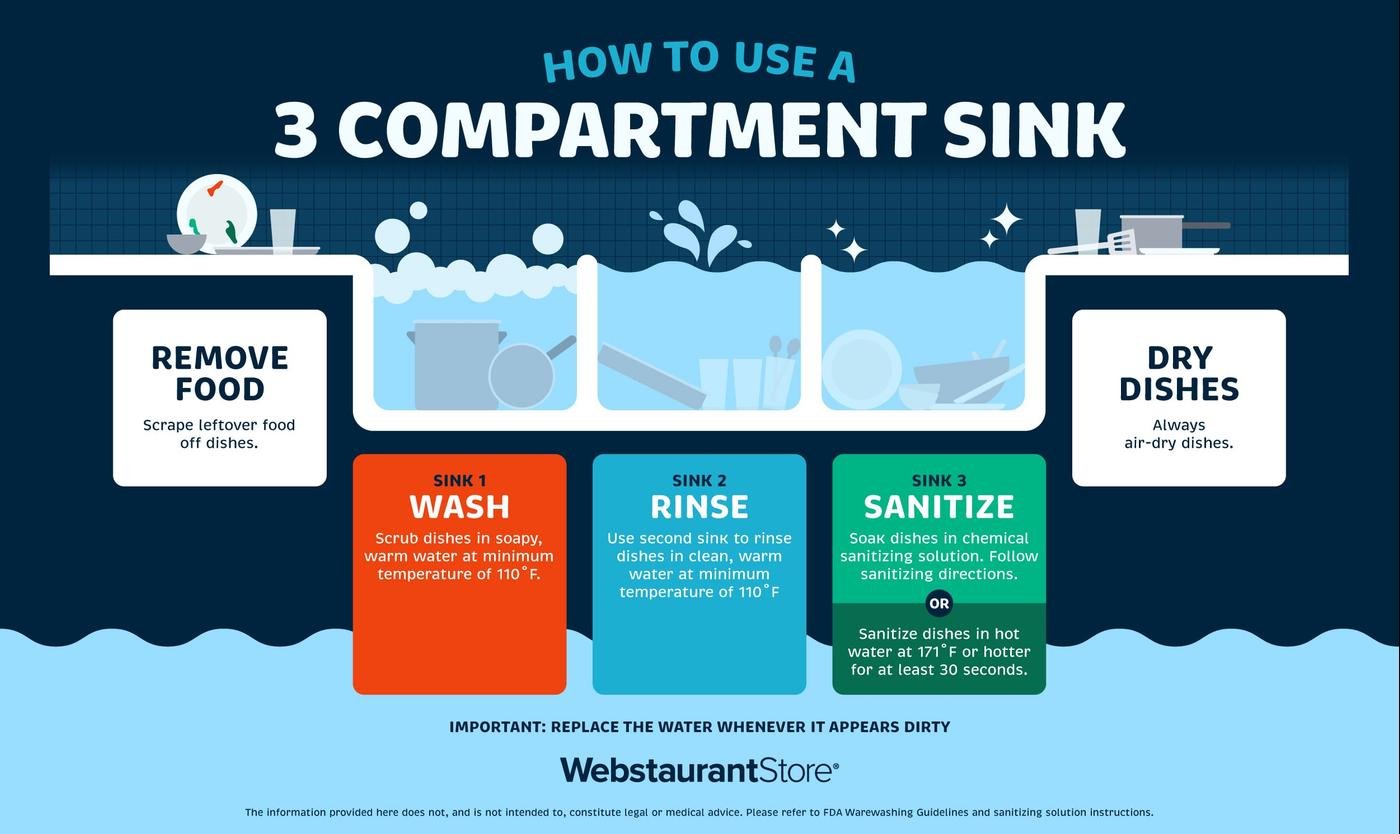
- Food scraps and greasy water go into a separate sealable container
- The rest of the wash water goes into...
Behold, the nerd cake! EVAPOTRON
Problem: No dumping greywater on Tankwa's sands — verboten! Official decree: erect an evaporator. It's a contest - burners vie like alchemists to vaporize the most, turning slop to thin air!
Simple, Boring and Utterly Inefficient Solution - Drying Wall
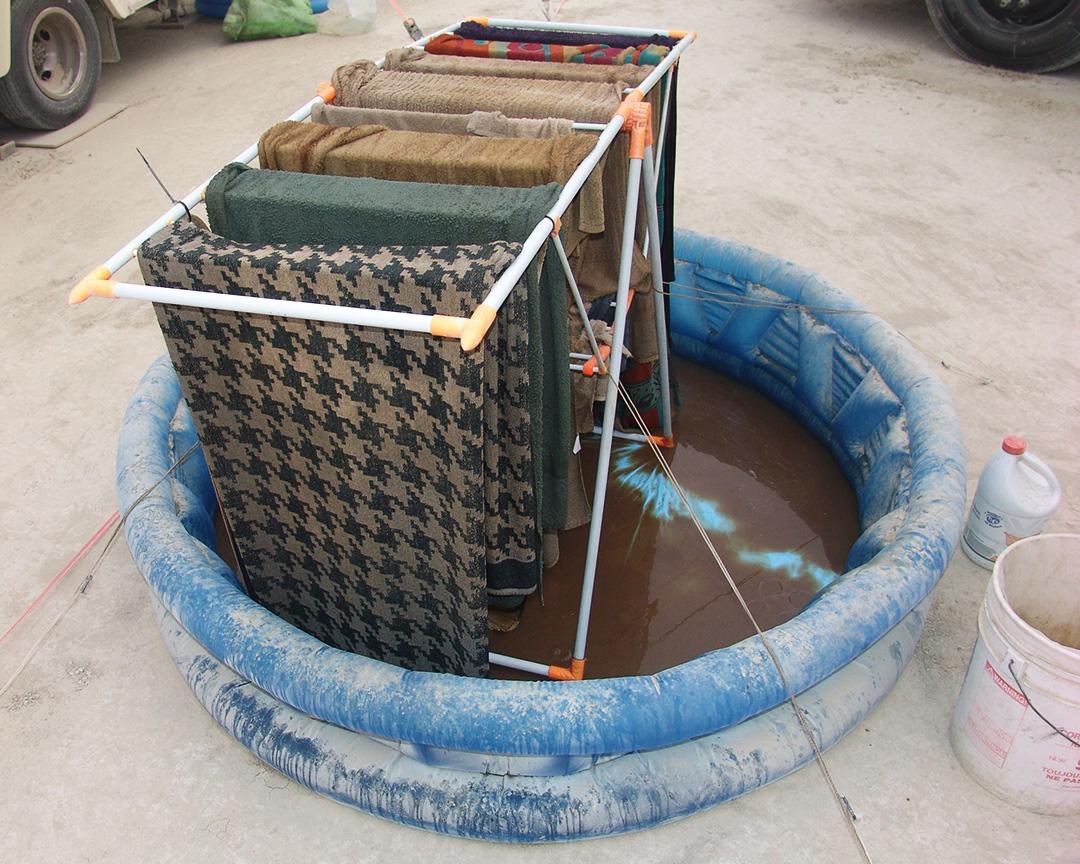
Hang rags on a rack so the bottom edge is in a reservoir with grey water. Capillary action lifts water up the fabric, it evaporates. Works from wind and sun.
More Fun Solution - Evapotron
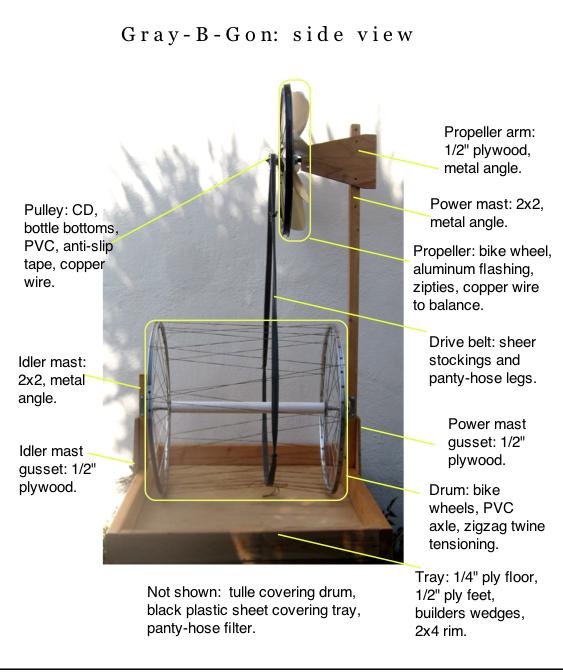
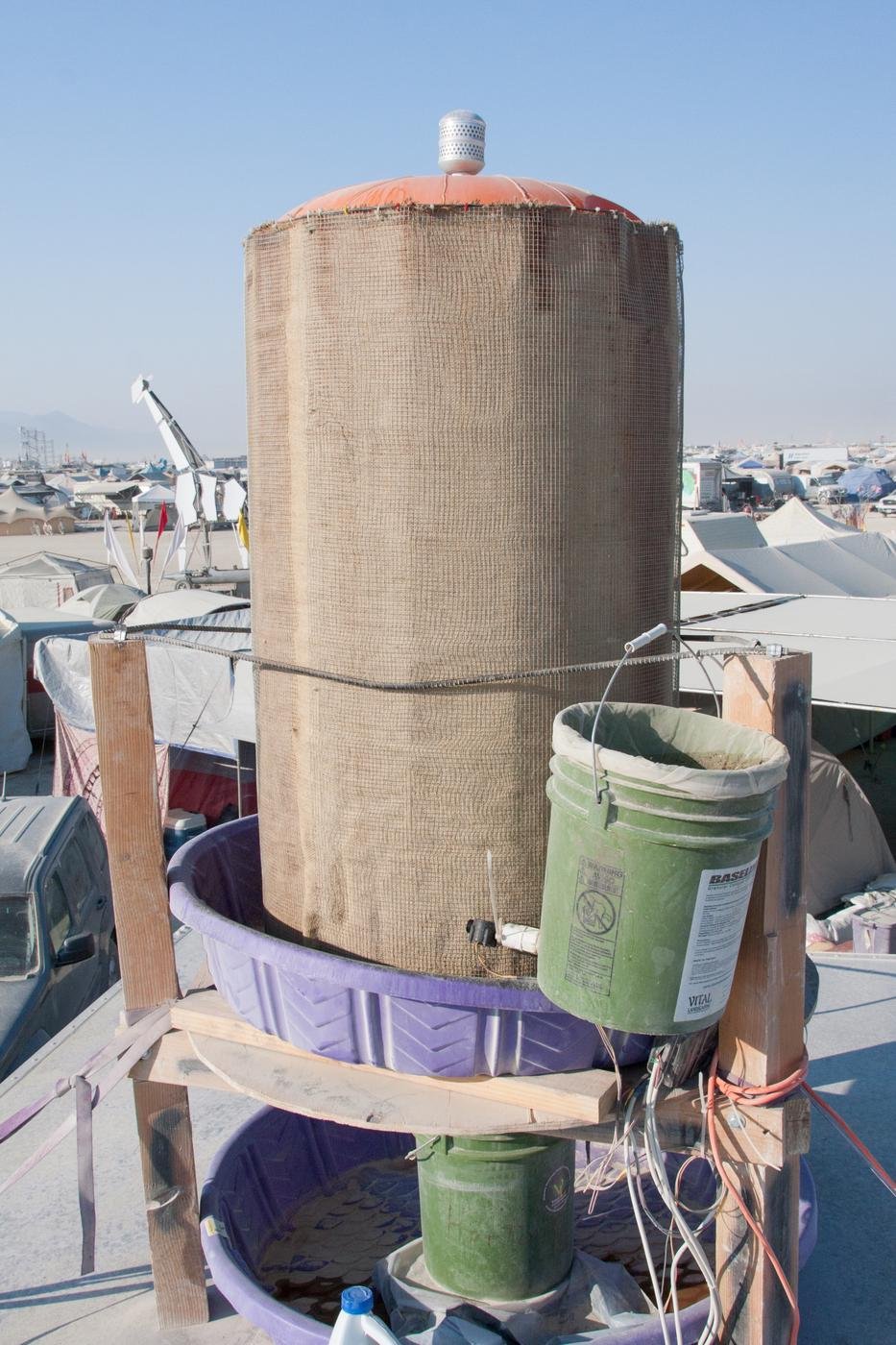
 kokopellimorel
How It Works
- Grey water collects in reservoir
- Large surface area of fabric or mesh
- For example, small pump (12V, can be solar-powered) pumps and distributes water onto mesh
- Wind + sun evaporate water
- Minimal sediment remains, which we take with us
Why This Is Cool
- Works autonomously
- Handles large volumes (relevant for 50 people)
- Can show off
Evapotron ingenuity welcome — efficient designs, anyone?
Risks
| Problem | Solution |
|---|---|
| 30% more people showed up | Stretch portions with carbs, reduce protein |
| 30% fewer people | Increase portions, invite neighbors to volunteer and eat |
| Refrigerator died | Cook all perishables immediately, switch to canned goods |
| Key volunteers didn't show | Simplify menu, recruit people from camp, remove fancy factor |
| Gas ran out | Spare cylinders. Always. Minimum 150% of calculation |
| Gas regulator broke | Buy two spares. |
Main rule: If in doubt, chuck it out. Food poisoning in the desert - three hours from help - less amusing than a wet bank holiday.
Checklist
Now
✅ Finalize number of people
☑️ Everyone to fill out spreadsheets about driving licenses, rented vehicles, their refrigerators and other camp-relevant specs. Add your food allergies!
☑️ Lock down menu accounting for mass allergies
✅ Assign Kitchen Lead backup
☑️ Form cooking team shifts
☑️ Arrange rental and logistics
☑️ Write a "Kitchen Bible" - document with all recipes and procedures
☑️ Decide "disposable plates vs everyone brings and washes their own"
☑️ Write a camp setup checklist
2-3 Days Before Departure
☑️ Pre-cooking party!
☑️ Transfer all sauces from glass to plastic squeeze bottles
☑️ Freeze all meals
☑️ Check all equipment
☑️ Charge all battery-powered pumps and check spare batteries
On Site
☑️ Place fire extinguishers in visible locations
☑️ Follow camp setup checklist and pass Safety Officer inspection
☑️ Assemble EVAPOTRON
☑️ Hang shift schedule
☑️ Set up IBC water cubes and connect distribution system
☑️ Check all vehicle refrigerators and their solar panels
Postlude
AfrikaBurn experience will be made all the easier and enjoyable if you seriously consider where you're going, what you're doing and what you'll need to do it.
AfrikaBurn is not an event where the usual festival survival kit (tent, booze, snacks) will be sufficient – it's an exercise in creativity and survival in an extreme environment. So plan ahead, plan smart, and plan to bring everything you need. If you do it right, you'll be in for the ride of your life.
AfrikaBurn isn't about food. It's about community, art, and rethinking how we live. But without proper food, all this turns into survival mode, where people think not about spiritual experience but about how to get fed.
My vision for the kitchen this Burn: try local dishes and not spend 6 hours cooking when you want to festival. When someone knows they'll be fed at 18:00, they can calmly explore, participate in workshops, and dance until morning.
Goal for the first year - make this infrastructure invisible. So the kitchen just works.
Reliability über Ambition, old bean.
Useful Links: